 Add to Chrome
 Add to Firefox
 Add to Edge
Generalizable CT-Free PET Attenuation and Scatter Correction for Pediatric Patients
Apr 24, 2026
Computed tomography (CT)-based attenuation and scatter correction improves quantitative PET but adds radiation exposure that is particularly undesirable in pediatric imaging. Existing CT-free methods are commonly trained in homogeneous settings and often degrade under scanner or radiotracer shifts, which limits their clinical utility. We propose the Generalizable PET Correction Network (GPCN), a dual-domain network for domain-robust CT-free PET attenuation and scatter correction. GPCN combines a multi-band contextual refinement module, which models pediatric anatomical variability through wavelet-based multiscale decomposition and long-range spatial context modeling, with a frequency-aware spectral decoupling module, which performs coordinate-conditioned amplitude/phase refinement in the Fourier domain. By synergizing multi-band spatial contextual modeling with asymmetric frequency-spectrum decoupling, the network explicitly separates invariant topological structures from domain-specific noise, thereby achieving precise quantitative recovery of both anatomical organs and focal lesions. This design aims to separate anatomy-dominant structures from domain-sensitive spectral residuals and to improve robustness across heterogeneous imaging conditions. We train and evaluate the method on 1085 pediatric whole-body PET scans acquired with two scanners and five radiotracers. In both joint training and zero-shot cross-domain evaluation, GPCN outperforms representative baselines and maintains stable quantitative accuracy on unseen scanner-tracer combinations. The method is further supported by ablation, region-wise quantitative analysis, and downstream segmentation experiments. In our cohort, the CT component of the conventional protocol corresponded to an average effective dose of 10.8 mSv, indicating the potential clinical value of reliable CT-free correction for pediatric PET.

Analysing Wideband Absorbance Immittance in Normal and Ears with Otitis Media with Effusion Using Machine Learning
Mar 04, 2021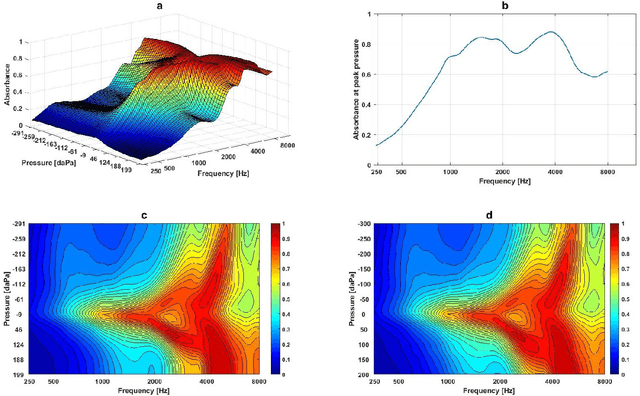
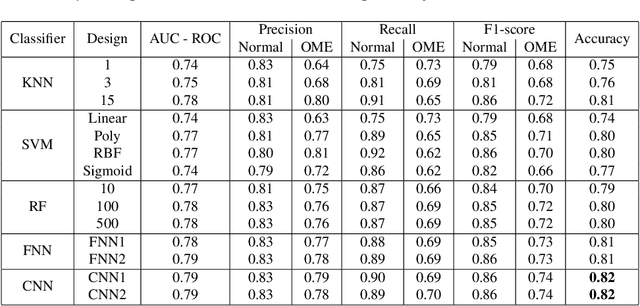
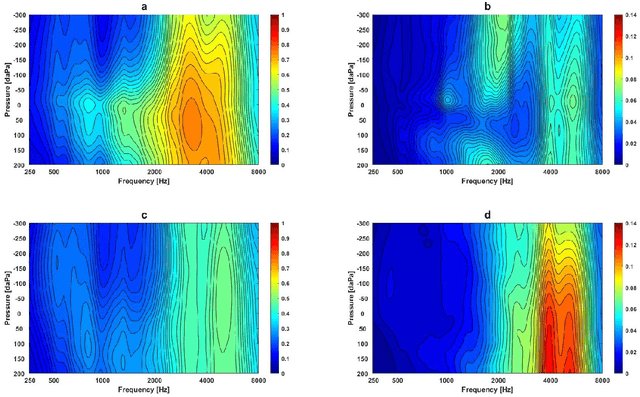
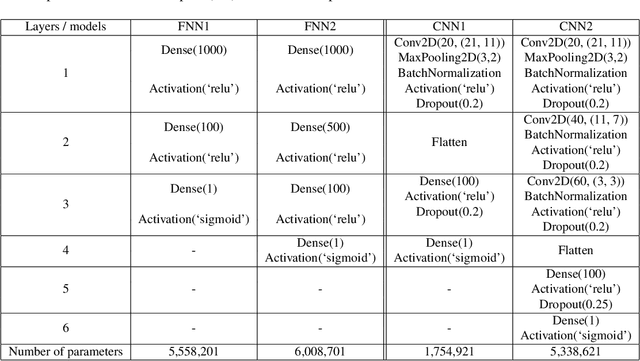
Wideband Absorbance Immittance (WAI) has been available for more than a decade, however its clinical use still faces the challenges of limited understanding and poor interpretation of WAI results. This study aimed to develop Machine Learning (ML) tools to identify the WAI absorbance characteristics across different frequency-pressure regions in the normal middle ear and ears with otitis media with effusion (OME) to enable diagnosis of middle ear conditions automatically. Data analysis including pre-processing of the WAI data, statistical analysis and classification model development, together with key regions extraction from the 2D frequency-pressure WAI images are conducted in this study. Our experimental results show that ML tools appear to hold great potential for the automated diagnosis of middle ear diseases from WAI data. The identified key regions in the WAI provide guidance to practitioners to better understand and interpret WAI data and offer the prospect of quick and accurate diagnostic decisions.